The Economic Impact of Mad Honey Hunting on Local Communities in Nepal
Nepal, a country blessed with towering mountains, rich cultural heritage, and diverse wildlife, is also home to one of the most unique and dangerous traditions in the world: mad honey hunting. This ancient practice, passed down through generations, is not only a thrilling adventure but also plays a significant role in the local economy. For communities living in the remote Himalayan regions, mad honey hunting in Nepal is more than just a tradition; it is a crucial source of income and a way of sustaining their livelihood.
This article explores the economic impact of mad honey hunting on local communities in Nepal, how it intertwines with tourism and adventure sports, and the role travel companies like Footprint Adventure Travel Company in Nepal play in promoting sustainable practices.
1. What is Mad Honey and Why is It Valuable?
Mad honey is a rare and exotic type of honey found in the Himalayan regions of Nepal. Produced by the giant Himalayan honeybee (Apis dorsata laboriosa), this honey contains grayanotoxin, a substance derived from the nectar of rhododendron flowers. The toxin gives the honey psychoactive properties, inducing hallucinations and a sense of euphoria when consumed in small quantities.
The high demand for mad honey in Nepal stems from its unique medicinal and hallucinogenic effects. Traditionally, it has been used by the locals for its purported health benefits, including relief from hypertension, diabetes, and joint pain. More recently, it has attracted attention from the global market due to its exotic appeal, leading to an increase in both demand and price.
Mad honey is sold at premium prices in international markets, particularly in countries like Japan, Korea, and China, where it is often used in traditional medicine. This demand creates a lucrative opportunity for local communities who harvest and sell the honey, providing a significant source of income.
2. The Role of Mad Honey Hunting in Local Economies
In the remote areas of Nepal, especially among the Gurung people, mad honey hunting is not only a cultural heritage but also a critical economic activity. For many households, it represents their primary source of income, helping to sustain their families in regions where agriculture and other forms of employment are limited due to the challenging mountainous terrain.
The economic impact of mad honey hunting can be seen in several areas:
- Direct Income from Honey Sales: The honey collected by hunters is often sold at local markets and exported to international buyers. The high price of mad honey, often reaching hundreds of dollars per kilogram, provides a substantial income for local honey hunters.
- Tourism and Adventure Sports: Mad honey hunting has also attracted adventurous tourists who are eager to witness or even participate in this dangerous practice. As part of Nepal’s broader offering of adventure sports, mad honey hunting has become a unique experience that draws thrill-seekers looking for an authentic cultural adventure. This has opened up additional revenue streams for local communities, who can charge tourists for guided hunts and offer accommodation and hospitality services.
- Supporting Local Businesses: As tourists flock to the Himalayan regions for mad honey hunting and other adventure activities, local businesses such as guesthouses, restaurants, and shops benefit from the increased footfall. This trickle-down effect boosts the local economy and helps communities thrive in these remote areas.
3. Sustaining a Dangerous Tradition: The Risks and Rewards
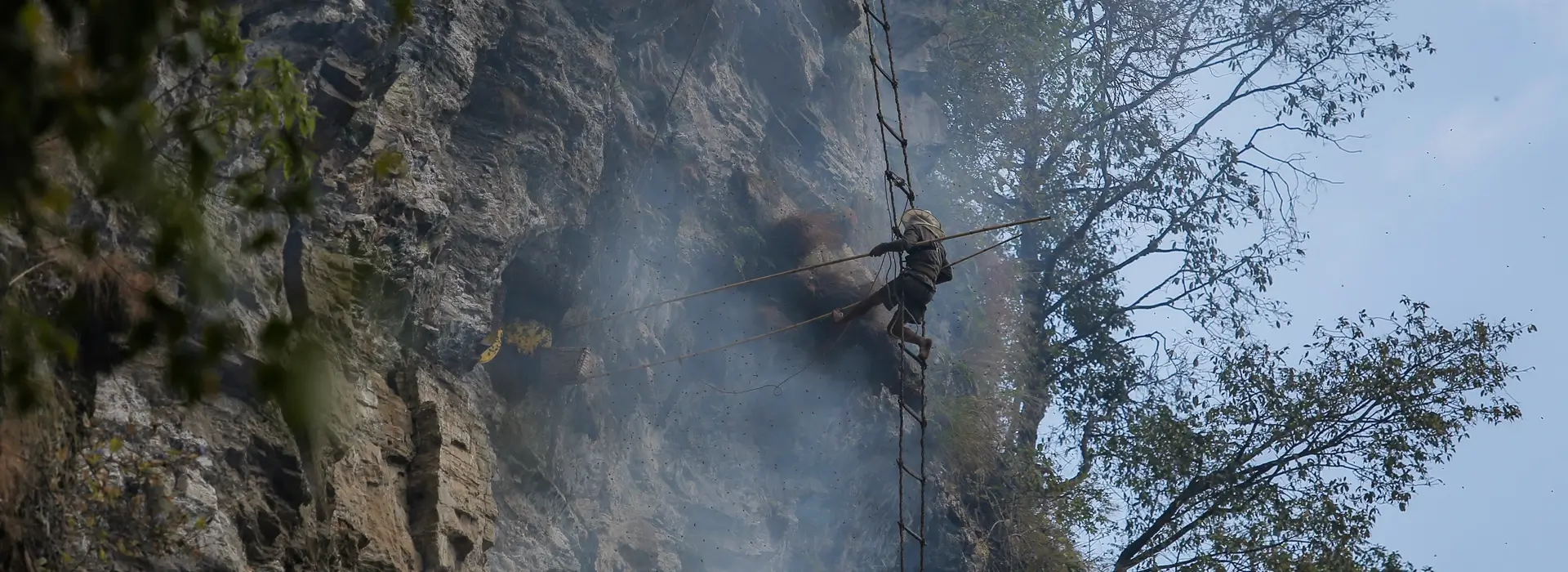
While mad honey hunting offers financial rewards, it is also fraught with danger. The process involves scaling vertical cliffs with rudimentary bamboo ladders and ropes, sometimes hundreds of meters above the ground, all while fending off attacks from swarms of giant honeybees. Accidents are common, and some hunters have tragically lost their lives in pursuit of the honey.
Despite the dangers, the high economic value of mad honey motivates hunters to continue the tradition. The activity provides an opportunity for local communities to capitalize on the global demand for this rare product, especially in regions where alternative economic opportunities are scarce. Many hunters acknowledge the risks but feel a sense of duty to continue the practice as it not only preserves their cultural heritage but also supports their families.
Recommendation Read on blog “Sustainable Practices in Mad Honey Hunting in Nepal”: https://articleestates.com/sustainable-practices-in-mad-honey-hunting-in-nepal-footprint-adventure/
4. Tourism and Mad Honey Hunting: A Unique Adventure Experience
In recent years, mad honey hunting in Nepal has gained international attention, not just for the rare honey itself, but also for the adventure and thrill that comes with the hunt. Tourists, particularly those interested in adventure sports and cultural experiences, are drawn to the idea of witnessing or participating in this dangerous but fascinating tradition.
As part of the broader adventure tourism industry in Nepal, which includes trekking, mountaineering, white-water rafting, and paragliding, mad honey hunting adds an element of cultural immersion that sets it apart from other activities. Travelers can explore remote villages, learn about the ancient practices of the Gurung people, and even partake in the honey hunt under the guidance of experienced locals.
Companies like Footprint Adventure Travel Company in Nepal have capitalized on this trend, offering tailored experiences that allow tourists to safely engage with this tradition. Footprint Adventure, known for its focus on sustainable and ethical tourism, ensures that tourists not only experience the thrill of the hunt but also respect the local culture and environment.
5. The Economic Impact of Adventure Tourism
The rise of adventure sports in Nepal has provided a significant boost to the country’s tourism industry, with mad honey hunting being a niche but growing part of this sector. Tour operators and travel companies like Footprint Adventure Travel have recognized the potential of integrating cultural activities with traditional adventure sports, offering tourists a more holistic experience.
This form of tourism benefits local communities in multiple ways:
- Job Creation: As more tourists visit for mad honey hunting and other adventure sports, local communities see an increase in demand for guides, porters, and hospitality workers, providing much-needed employment opportunities.
- Infrastructure Development: The influx of tourists necessitates the development of infrastructure, including better roads, improved communication networks, and enhanced lodging facilities. These developments benefit both tourists and locals, improving the overall quality of life in these remote regions.
- Promotion of Local Culture: Adventure tourism centered around mad honey hunting also helps promote and preserve local traditions. As more tourists take an interest in cultural activities, there is greater incentive for younger generations to learn and continue these practices, preventing the loss of this unique heritage.
6. Challenges and Sustainability Issues
While mad honey hunting has clear economic benefits for local communities, it also poses sustainability challenges. The increasing demand for mad honey has led to concerns about overharvesting, which could endanger the giant Himalayan honeybee population and disrupt the delicate ecological balance of the region.
Furthermore, the growing number of tourists presents the risk of cultural commodification, where traditions like mad honey hunting become commercialized and lose their authenticity. Travel companies like Footprint Adventure Travel are aware of these issues and are working to promote sustainable practices that balance economic benefits with the preservation of the environment and culture.
To ensure the long-term viability of mad honey hunting as both a cultural tradition and an economic activity, it is essential to regulate the practice, promote eco-tourism, and educate both locals and tourists about sustainable harvesting techniques.
Conclusion: The Future of Mad Honey Hunting in Nepal
Mad honey hunting in Nepal is more than just a dangerous tradition; it is an essential economic activity that supports entire communities in the remote Himalayan regions. While the practice presents significant risks, the financial rewards from honey sales and adventure tourism provide crucial income for local families.
As the world continues to discover the allure of mad honey and the thrill of the hunt, it is vital to ensure that the practice remains sustainable. By supporting local communities through responsible tourism, partnering with ethical travel companies like Footprint Adventure Travel Company in Nepal, and promoting the preservation of this ancient tradition, mad honey hunting can continue to be both an economic boon and a cherished cultural legacy for future generations.